
From Biomedical Scientist to Machine Safety Specialist: Meet Kjersti Bruntveit
Career paths are not always linear. Kjersti Bruntveit’s journey is a good example of how experience from different industries can come together to create valuable perspectives.
Kjersti began her career as a Biomedical Scientist, working with laboratory instruments, patient samples and biological analysis in the healthcare sector. Later, she moved into the aluminium industry, where the focus shifted towards quality, structure and process understanding.
With further education in HSE and machine safety, she has combined experience from both laboratory work and heavy industry. Today she plays a key role in areas such as risk assessments, CE compliance, machine safety and quality work.
Her transition from healthcare to industry demonstrates how different professional backgrounds can strengthen engineering and safety work. The same scientific precision that guided her laboratory work is still present today—now applied in a more rugged and technical environment.
We asked Kjersti a few questions about her work and perspective on safety.
How has your background as a biomedical scientist influenced how you assess risk and safety in industry?
“My background as a biomedical scientist taught me the value of precision and structure. In the laboratory everything had to be documented, controlled and evaluated critically, because even small mistakes could have serious consequences.
I also saw how people’s understanding of risk could sometimes mean the difference between life and death. That perspective has stayed with me and influences how I work in industry today.
I look for details, cause-and-effect relationships and how people and processes interact. Even though I now work with machines instead of patients, the principle is the same: understanding risk, preventing failures and creating safe environments where health, safety and reliability are maintained.”
What does CE compliance mean in practice, and why is it important for our customers?
“For me, CE compliance is about more than just a label—it is about trust. When a machine is CE marked it means it has been assessed against the relevant health, safety and environmental requirements, and that we can document compliance.
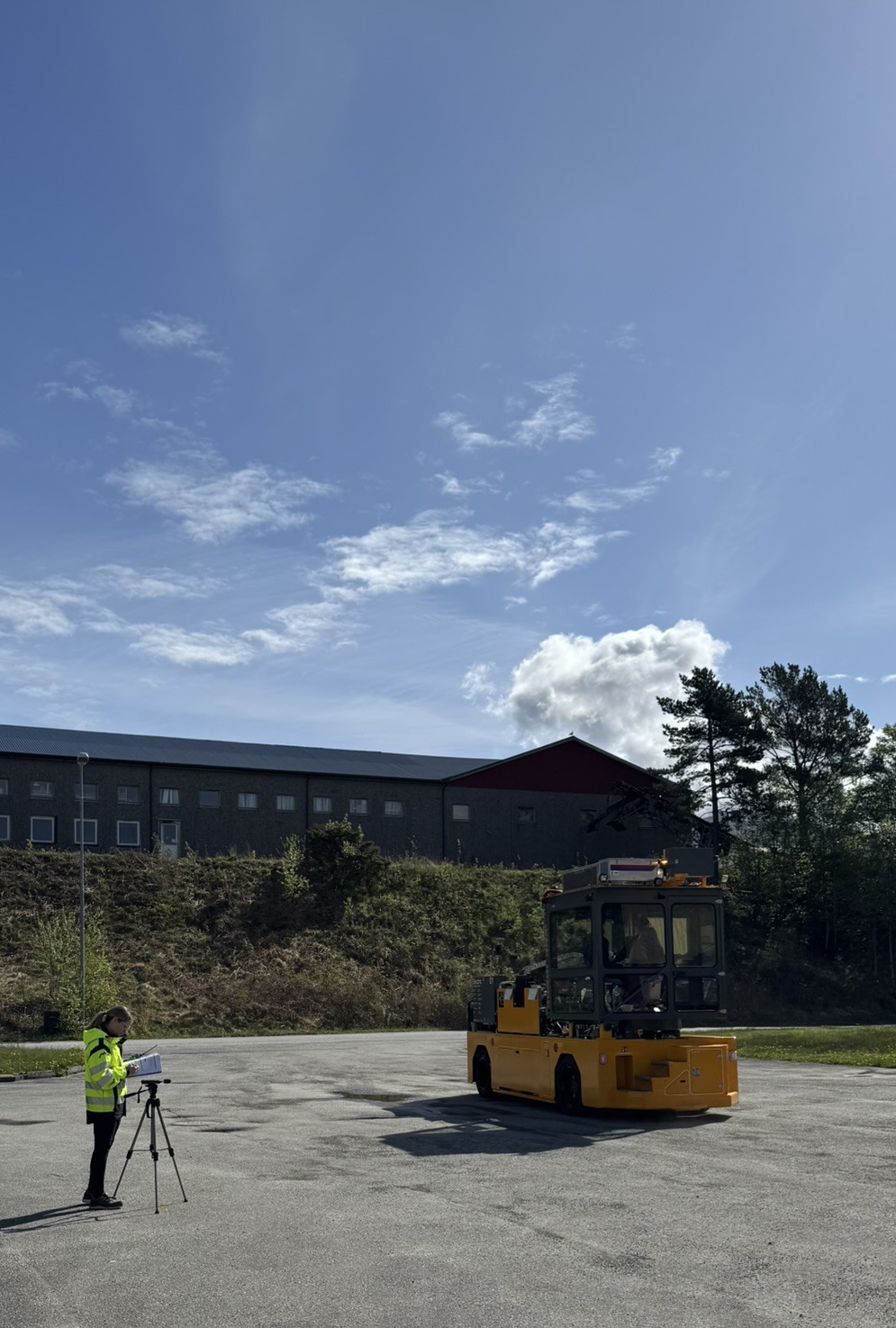
In practice this involves a thorough process of risk assessments, testing and technical documentation, ensuring traceability throughout the entire development process.
For our customers this provides confidence that the equipment is safe to use and built on both quality and functionality. CE compliance is proof that we take safety and quality seriously.”
What experience from the aluminium industry have you brought with you into your work with quality and compliance?
“Working in the aluminium industry gave me experience from several parts of production, both as an operator and within quality control. It showed me how closely everything in a production environment is connected, and how small changes in routines or processes can affect both quality and safety.
I also gained great respect for the practical work carried out in production environments. Having the right tools and good working conditions is essential for operators.
This experience helps me understand how the machines we design are actually used, and what is important for the people working with them. It makes it easier to see the full picture and develop solutions that work in practice—not only on paper.”
Why is machine safety more than just a technical requirement?
“For me, machine safety is about people—not just technical solutions and regulations. It is easy to view safety as a requirement that must simply be fulfilled, but in reality it is about creating safe working conditions for those who operate the machines every day.
When safety is considered throughout the entire process, it shows that we care about both the user and the final result. That builds trust, because customers notice the difference between a product that is merely ‘compliant’ and one that is developed with genuine consideration for the people who will work with it.”
At SMV, we believe that safety, engineering and real operational experience must go hand in hand. Kjersti’s background is a strong example of how interdisciplinary knowledge strengthens both product development and customer trust.


.svg)
